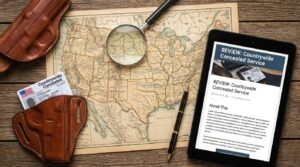
How to Get Concealed Carry Permit
If you’re considering getting a concealed carry permit, it’s essential to understand the legal requirements in your state. Each state has its own rules about eligibility, training, and documentation. You’ll need to navigate through these regulations carefully to guarantee you meet all criteria. Start by researching your state’s laws and consider what steps are necessary to complete your application. Knowing what’s ahead will make the process smoother and more efficient.
Understanding the Legal Requirements
Before you can carry a concealed weapon, you need to understand the legal requirements that vary by state. Each state sets its own eligibility criteria, so it’s essential to know what applies to you.
Typically, you’ll need to be at least 21 years old and a legal resident. Criminal background checks are common, and some states require you to complete safety training courses. Certain mental health evaluations may also be necessary.
Be aware of restrictions related to prior felonies or domestic violence charges, as these can disqualify you. Additionally, some states might impose residency requirements or mandate specific documentation.
Always check your state’s requirements to guarantee you’re compliant before applying for your concealed carry permit.
Researching Your State’s Specific Laws
Researching your state’s specific laws regarding concealed carry permits is essential for ensuring compliance and understanding your rights. Each state has different regulations, from application processes to eligibility requirements.
Start by visiting your state’s official government website or the Department of Public Safety. Look for sections on firearm laws and concealed carry permits. Pay attention to age restrictions, residency requirements, and any background checks or mental health evaluations needed.
Also, familiarize yourself with where you can legally carry, as some locations may be off-limits. Don’t forget to check for any local ordinances that might impose additional restrictions.
Understanding these laws will help you navigate the application process and exercise your rights responsibly.
Completing the Necessary Training
Once you have a solid understanding of your state’s laws, the next step is completing the necessary training to obtain your concealed carry permit.
Most states require you to participate in a certified training course, which covers firearm safety, handling, and self-defense laws. Look for classes offered by reputable instructors or organizations, and verify they meet your state’s specific requirements.
During training, you’ll gain hands-on experience with firearms and learn critical skills like proper aiming, loading, and unloading. After completing the course, you’ll typically receive a certificate of completion.
Keep this document safe, as you’ll need it for your application. Don’t rush through the training; mastering these skills is essential for your safety and the safety of those around you.
Gathering Required Documentation
As you prepare to apply for your concealed carry permit, gathering the required documentation is essential to streamline the process.
Start by collecting a valid government-issued ID, such as a driver’s license or passport, to verify your identity. You’ll also need proof of residency, which can be a utility bill or lease agreement.
Next, obtain your training certificate from the required firearms training course, demonstrating your proficiency. If applicable, include any additional documentation, such as mental health evaluations or background check approvals.
Be prepared for fingerprinting, as many states require this as part of the application process. Organizing these documents in advance will save you time and effort when you submit your application.
Submitting Your Application
After you’ve gathered all your required documentation, it’s time to submit your application for a concealed carry permit.
Begin by reviewing your local regulations, as submission processes can vary by state. Typically, you’ll need to submit your application either online or in person at the designated law enforcement agency.
Make sure you include all necessary documents, like proof of residency and training certificates. Pay any required fees, which can range widely depending on your location.
It’s essential to double-check your application for completeness to avoid delays. After submission, keep a copy of your application and any receipts for your records.
Be prepared for a background check, which may take several weeks. Patience is key during this process.
Maintaining Your Permit and Staying Informed
Maintaining your concealed carry permit requires ongoing responsibility and vigilance to guarantee compliance with state laws.
Regularly check for any changes in legislation that may affect your permit status; laws can change frequently. Attend refresher courses to stay updated on safety protocols, handling techniques, and legal responsibilities.
Keep your personal information current with your local authorities, especially if you move or change your contact details. Be aware of where you can and can’t carry; some locations may have specific restrictions.
Finally, practice responsible firearm ownership by storing your weapon securely and practicing regularly to maintain proficiency.
Staying informed and proactive guarantees you remain a responsible permit holder, ready to act in accordance with the law.
Tactical Equipment Armory

Tactical Gear Armory is a group of tactical gear geeks! We specialize in everything from martial arts to AR-15's and other firearms.