Best 300 Blackout Rifle: The Complete Guide to Finding Your Perfect AR Platform in 2025/2026

Best 300 Blackout Rifles:
- Best All-Around: Q HONEY BADGER
- Best for Home Defense: DANIEL DEFENSE DDM4 PDW
- Best for Hunting: Ruger American Ranch Rifle
Choosing the best 300 Blackout rifle demands understanding what separates exceptional performance from mediocre compromises. The 300 AAC Blackout cartridge has evolved from a specialized military round into one of the most versatile options for home defense, hunting, and recreational shooting. This comprehensive guide cuts through the marketing hype to reveal which rifles genuinely deliver superior performance, reliability, and value. You’ll discover the key factors that determine accuracy and effectiveness, learn why certain manufacturers consistently outperform others, and understand exactly which features matter most for your specific needs. Whether you’re seeking a suppressed PDW for close-quarters home defense, a hunting rifle for deer hunting, or a range companion that excels with both subsonic and supersonic ammunition, this article provides the definitive information you need to make an informed decision.
Best All-Around 300 Blackout Rifle: The Honey Badger

The Q Honey Badger stands as the definitive all-around 300 Blackout rifle because it was literally developed alongside the cartridge itself by the same team at Advanced Armament Corporation. Kevin Brittingham and his engineers created both the ammunition and rifle simultaneously for U.S. special operations forces seeking to replace the MP5-SD with a platform offering rifle-caliber performance in a compact package. At just 4.5 pounds with a 7-inch barrel and 1:5 twist rate, the Honey Badger delivers exceptional performance across home defense, hunting, and recreational shooting while remaining more compact than most pistol-caliber carbines.
Why the Honey Badger excels as the best overall choice:
- Weighs only 4.5 pounds through meticulous use of aerospace materials and weight optimization—lighter than most AR pistols while maintaining durability for rigorous use
- 7-inch barrel with 1:5 twist rate stabilizes heavy subsonic bullets perfectly while extracting maximum ballistic potential from the cartridge without unnecessary bulk
- Proprietary 2-position PDW stock collapses to just 20 inches overall—shorter than many pistol-caliber carbines—while extending to 25 inches for comfortable shooting
- Adjustable low-profile gas block allows precise tuning for reliable function with both subsonic and supersonic loads, suppressed or unsuppressed
- 2-stage trigger delivers crisp, clean breaks that enhance accuracy without requiring aftermarket upgrades
- M-LOK free-floating handguard maintains consistent barrel harmonics regardless of accessory placement
- Designed specifically for suppressed use with quieter buffer system and Cherry Bomb muzzle brake that doubles as quick-attach suppressor mount
- $3,150 price includes integrated features and refinement that would cost more to assemble piecemeal from aftermarket parts
What Makes the 300 Blackout Cartridge Special?
The 300 Blackout represents a purpose-built solution to specific operational challenges. Advanced Armament Corporation (AAC) developed this cartridge in collaboration with military special operations units seeking a rifle round that could deliver rifle-caliber performance from short barrels while remaining fully suppressed. The result transformed the AR platform capabilities in ways that 5.56 NATO simply cannot match.
Check out some of our more popular tactical and survival products
- Fatal Blackout Book/Survival Guide
- Stinger Combact Optic
- VNSH Holster
- Tactistaff Hiking Stick
- Trekstaff Trek Pole
- Raven Night Vision
- Predator Laser Sight
- BYRNA TCR
This cartridge achieves full ballistic potential from barrels as short as 9 inches. In contrast, 5.56 requires approximately 20 inches of barrel length to reach its designed velocity. The 300 BLK uses a .30-caliber projectile seated in a modified 5.56 case, creating a round that fits standard AR magazines and requires only a barrel swap to convert existing AR-15 rifles. The genius lies in its dual personality—shooters can select supersonic loads delivering approximately 2,200 feet per second for maximum effective range, or switch to subsonic rounds traveling under 1,050 feet per second for near-silent operation when suppressed.
The versatility extends beyond just velocity options. Heavier subsonic bullets in the 190-220 grain range provide excellent barrier penetration and terminal performance at close range, making 300 Blackout an effective option for home defense. Lighter supersonic projectiles in the 110-125 grain range deliver flatter trajectories suitable for hunting deer and hogs out to 200 yards. This ammunition flexibility means one rifle platform serves multiple purposes that would otherwise require different firearms.
Who Makes the Best 300 Blackout Rifle?
Several manufacturers have distinguished themselves through consistent quality and innovation in the 300 Blackout platform. Daniel Defense established early dominance with their DDM4 series, bringing precision manufacturing and proprietary components to create rifles that reliably deliver sub-MOA accuracy. Their cold hammer-forged barrels and attention to gas system tuning specifically for 300blk set standards others follow.
Sig Sauer’s MCX line revolutionized the category by abandoning traditional AR architecture entirely. The MCX uses a gas piston system with interchangeable barrels and an upper receiver that requires no buffer tube. This design allows folding stocks and ultra-compact configurations like the Rattler variant. The Virtus series represents Sig’s refined approach, incorporating lessons from military contracts and competitive shooting to create exceptionally reliable platforms optimized for suppressor use.
Q LLC brought fresh thinking from AAC’s original designers, including Kevin Brittingham who helped develop the 300 Blackout cartridge itself. The Honey Badger represents their vision of the ideal PDW—weighing just 4.5 pounds with a 7-inch barrel and collapsing stock that shrinks the overall length to a mere 20 inches. Their engineering focuses obsessively on weight reduction and suppressor optimization, using components machined from aerospace materials.
Springfield Armory, Palmetto State Armory, and CMMG each offer compelling options at different price points. Springfield brings their SAINT series quality control to 300 Blackout offerings, providing reliable performance at accessible prices. Palmetto State Armory’s JAKL represents their most ambitious project—a piston-driven design with a monolithic upper receiver that competes directly with rifles costing twice as much. CMMG specializes in customization, offering complete rifles and individual components that allow shooters to build precisely the configuration they need.
How Do I Choose the Best 300 Blackout Rifle for My Needs?
Selecting your ideal rifle begins with honest assessment of intended use. A 300 Blackout pistol or SBR excels for home defense and vehicle storage, where compactness matters more than long-range precision. Barrels between 7 and 10.5 inches create maneuverable packages that still extract the cartridge’s full ballistic potential. However, these ultra-short configurations generate substantial muzzle blast without suppressors and require tax stamps if configured as SBRs rather than AR pistols.
Hunting applications benefit from longer barrels in the 10.5 to 16-inch range. The additional barrel length improves velocity consistency and provides better sight radius for accurate shot placement. A 16-inch barrel avoids NFA restrictions entirely while delivering approximately 100 feet per second more velocity than 9-inch configurations. This velocity difference extends your effective range and improves terminal ballistics on game animals.
Gas system configuration dramatically affects reliability and shooter experience. A properly tuned gas block ensures reliable cycling with both subsonic and supersonic ammunition. Adjustable gas blocks provide the flexibility to optimize performance when running a suppressor—reducing gas blowback while maintaining reliable function. Standard fixed gas blocks work adequately for unsuppressed shooting but often create excessive carrier velocity and harsh recoil when suppressed.
The upper receiver and handguard selection influences accuracy, weight, and accessory mounting. Free-floating M-LOK handguards allow barrel harmonics to remain consistent regardless of hand pressure or accessory placement. This improves accuracy compared to traditional handguards that contact the barrel. Look for handguards with adequate internal diameter to accommodate suppressors—many ultra-slim designs create clearance issues with larger-diameter cans. Picatinny rail sections integrated into M-LOK allow mounting lights, lasers, or forward grips exactly where you need them.
What Are the Best 300 Blackout Rifles for Home Defense?

Close-quarters home defense demands specific characteristics from a 300 Blackout rifle. The platform must be compact enough for hallway navigation while providing sufficient ammunition capacity and stopping power. Barrel lengths between 7.5 and 10.5 inches optimize maneuverability without sacrificing the cartridge’s effectiveness. The Daniel Defense DDM4 PDW represents an ideal configuration with its 7-inch barrel, Law Tactical folding adapter, and overall length of just 20.75 inches when collapsed.
The Honey Badger earned its reputation specifically for this role. The integrally designed stock, grip, and handguard create a balanced package that points naturally and absorbs recoil effectively despite minimal weight. The pistol variant avoids NFA complications while maintaining the same handling characteristics. The 7-inch barrel with 1:5 twist rate stabilizes even the heaviest subsonic bullets, ensuring reliable expansion in defensive scenarios.
Suppressor compatibility becomes particularly important for home defense weapons. Unsuppressed muzzle blast from short-barreled 300 Blackout rifles can cause temporary hearing damage in confined spaces—a serious consideration during high-stress defensive situations. A quality suppressor like the Omega 300 reduces report to hearing-safe levels while eliminating the disorienting muzzle flash. The combination of subsonic ammunition and suppression creates a defense weapon that won’t leave you and your family with permanent hearing loss.
The Sig MCX Rattler pushes compactness to the extreme with its 5.5-inch barrel. This ultra-short configuration creates an extremely maneuverable platform barely larger than many pistol-caliber carbines. The gas piston system handles the violent pressures of such a short barrel more reliably than direct impingement. However, be prepared for substantial fireball and concussion if shooting unsuppressed—this configuration truly demands a suppressor for practical use.
Which 300 Blackout Rifles Excel for Hunting?
Deer hunting and hog control represent the 300 Blackout’s sweet spot for sporting use. The cartridge delivers sufficient energy for clean kills on whitetail deer out to approximately 150 yards with supersonic ammunition, while subsonic loads work effectively inside 100 yards when paired with expanding bullets designed for low-velocity performance. The key to hunting success lies in selecting rifles optimized for accuracy rather than just compactness.
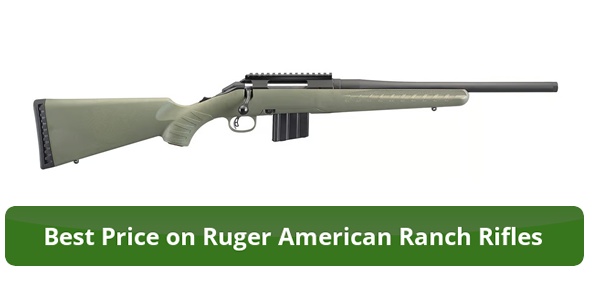
The Ruger American Ranch rifle provides exceptional value for hunters. This bolt-action platform eliminates the semi-automatic gas system entirely, creating a simpler, lighter hunting rifle chambered in 300 Blackout. The cold hammer-forged barrel and power bedding system deliver accuracy that typically surpasses comparably-priced AR platforms. The rifle accepts standard AR magazines, providing the flexibility to run 10-round magazines for hunting regulations while having access to 30-round options for hog eradication.
Bolt-action 300 Blackout rifles offer unique advantages for suppressed hunting. Without a gas system directing combustion gases back into the action, these platforms run quieter than semi-automatics even with the same suppressor. The manual bolt cycle eliminates the mechanical noise of reciprocating actions. This allows follow-up shots on groups of hogs without alerting the entire sounder. The Ruger’s threaded barrel accommodates any standard 5/8×24 suppressor, and the 16-inch barrel length optimizes velocity for hunting performance.
AR-platform hunting rifles like the Daniel Defense DDM4 V7 provide semi-automatic capability in a precision package. The mid-length gas system moderates recoil and improves accuracy compared to pistol-length systems common on shorter barrels. The 16-inch barrel represents the ideal compromise—long enough for maximum velocity and accuracy, but compact enough to remain handy in dense cover. M-LOK attachment points allow mounting bipods for precision shooting from stable positions. A quality optic transforms the platform’s capability—consider a 1-6x variable scope that provides both close-range speed and magnification for shot placement at distance.
What Should I Look for in a 300 Blackout AR Pistol?
The AR pistol configuration has become increasingly popular for 300 Blackout builds, offering many SBR benefits without NFA paperwork and tax stamps. Current regulations allow pistol braces that significantly improve control compared to shooting unsupported. Look for pistols with barrel lengths between 7 and 10.5 inches—this range optimizes the cartridge’s performance while maintaining compact dimensions.
Buffer system selection affects both reliability and recoil characteristics. Standard carbine buffers often prove too light for reliable cycling with heavy subsonic ammunition. Upgrading to an H1 or H2 buffer reduces bolt carrier velocity and smooths the recoil impulse. Some manufacturers include optimized buffer weights specifically for 300 Blackout, eliminating guesswork. The buffer tube length also matters—pistol-length tubes allow more compact overall dimensions while still accommodating proper spring compression.
The charging handle might seem like a minor detail, but it significantly affects the shooting experience. Ambidextrous designs like those from Radian or Geissele provide positive purchase for aggressive charging and malfunction clearance. Extended latches prevent interference when running suppressors or optics with larger objective lenses. A quality charging handle is one upgrade that immediately improves every range session and defensive drill.
Muzzle device selection influences both flash signature and recoil management. Flash hiders minimize visible signature when shooting supersonic loads in low light—important for maintaining night vision during defensive use. Compensators redirect gases to counteract muzzle rise, enabling faster follow-up shots. However, the best muzzle device for most 300 Blackout pistols is actually a suppressor mount. Quick-attach systems allow rapid suppressor installation while providing effective flash hiding and minimal recoil increase when shooting unsuppressed.
How Important Is Barrel Length for 300 Blackout Performance?
Barrel length affects velocity, accuracy, and handling characteristics in ways specific to 300 Blackout. Unlike 5.56 where velocity increases dramatically with each additional inch of barrel, 300 BLK reaches optimal performance much sooner. A 9-inch barrel extracts approximately 95% of available velocity from the cartridge. Adding length beyond this point provides diminishing returns—a 16-inch barrel might deliver only 50-100 feet per second more velocity than a 10-inch configuration.
Subsonic ammunition shows even less velocity variation across barrel lengths. Heavy 220-grain bullets designed to remain subsonic already operate at the lower end of the velocity spectrum. Whether fired from a 7-inch barrel or a 16-inch barrel, these rounds typically stay within a 50 feet per second velocity range. This consistency means you can select barrel length based primarily on handling preferences rather than ballistic concerns when shooting subs exclusively.
Short barrels create specific technical challenges despite the cartridge’s optimization. Gas port pressure increases dramatically in barrels under 8 inches, requiring careful tuning to prevent overgassing. An adjustable gas block becomes nearly essential for reliable function across ammunition types. Some ultra-short configurations like the 5.5-inch Rattler barrel generate such extreme pressures that they require purpose-engineered components throughout the gas system.
Practical accuracy considerations extend beyond pure barrel length. The sight radius limitation of very short barrels makes precise iron sight shooting more difficult. A 7-inch barrel provides perhaps 12 inches of sight radius, while a 16-inch barrel offers closer to 20 inches. This difference becomes noticeable when making precise shots beyond 100 yards. However, modern red dot optics largely negate this disadvantage—a quality red dot provides consistent point of aim regardless of barrel length or sight radius.
Do I Need a Suppressor for My 300 Blackout Rifle?
While not absolutely necessary, a suppressor transforms the 300 Blackout shooting experience in ways no other accessory can match. The cartridge was literally designed around suppressed use—AAC developed it specifically to create an effective suppressed rifle caliber for special operations. Subsonic 300 Blackout through a quality suppressor produces hearing-safe sound levels comparable to a pellet gun. The combination eliminates the need for hearing protection during both recreational shooting and defensive scenarios.
Supersonic ammunition still benefits substantially from suppression despite not achieving the same dramatic sound reduction. A good rifle-caliber suppressor reduces report by approximately 25-30 decibels. This brings supersonic 300 Blackout from approximately 160 decibels down to 130-135 decibels—still loud, but significantly more comfortable and less damaging to hearing. The reduction in muzzle blast makes the rifle dramatically more pleasant to shoot and reduces flinch-inducing concussion.
Running a suppressor does require specific rifle configuration considerations. Gas systems tuned for unsuppressed fire often become overgassed when you add a suppressor, trapping excess pressure in the system. This drives the bolt carrier rearward violently, creating harsh recoil and increased wear on components. An adjustable gas block allows tuning gas flow to optimize cycling speed with your specific suppressor and ammunition combination. Some rifles include adjustable gas blocks from the factory, while others require aftermarket upgrades.
Suppressor selection for 300 Blackout involves balancing performance, weight, and budget. Titanium suppressors like the Q Thunder Chicken provide exceptional sound reduction in lightweight packages, but command premium prices. Stainless steel options from companies like Dead Air or SilencerCo offer excellent performance at more accessible price points. Consider mounting systems carefully—quick-detach mounts add flexibility but increase weight and potential point-of-impact shift. Direct-thread mounting provides the lightest, most accurate configuration for dedicated 300 Blackout rifles.
What About Building a Custom 300 Blackout Rifle?
Building a custom AR platform rifle allows precise configuration to your exact specifications while potentially saving money compared to factory rifles. The standard AR architecture means you can combine an existing 5.56 lower receiver with a new 300 Blackout upper, creating a complete rifle with minimal investment. This modularity represents one of the AR platform’s greatest strengths—parts interchange across manufacturers with mil-spec dimensions.
Upper receiver selection should prioritize compatibility with your intended use. Forged uppers from companies like Aero Precision provide excellent strength at budget-friendly prices. Billet uppers offer aesthetic appeal and sometimes include integrated features like enhanced ejection ports, though they typically cost more without meaningful performance benefits. The most critical considerations are proper headspacing when you install the barrel and ensuring the upper is machined to accept your chosen handguard attachment system.
Barrel quality determines accuracy more than any other component. A match-grade stainless steel barrel from Ballistic Advantage or Faxon Firearms will outshoot a mil-spec chrome-lined barrel, though the chrome lining provides superior durability for high round counts. For 300 Blackout, prioritize twist rate selection—1:7 or 1:8 twist stabilizes most ammunition effectively, while faster 1:5 or 1:6 twist rates optimize heavy subsonic bullets. Barrel length choices follow the principles discussed earlier, with 10.5 inches representing an excellent balance for most uses.
The gas system requires careful matching to barrel length and intended ammunition. Pistol-length gas systems work well for barrels under 10 inches but create harsh recoil and excessive wear on 16-inch configurations. Carbine-length gas works adequately for most applications but tends toward overgassing with supersonic ammunition. If building a dedicated suppressor host, investing in an adjustable gas block from Superlative Arms or SLR Rifleworks pays dividends in smooth operation and reduced wear. CMMG offers complete drop-in gas systems that simplify the build process while ensuring proper component compatibility.
How Does 300 Blackout Compare to 8.6 Blackout?
The newer 8.6 Blackout cartridge represents the logical extension of subsonic rifle development. Where 300 Blackout uses .30-caliber bullets, 8.6 Blackout employs .338-caliber projectiles weighing 285-350 grains. This increased mass and diameter delivers dramatically improved terminal ballistics and barrier penetration when compared to 300 BLK subsonic loads. The cartridge was designed specifically by Q LLC for hunting applications where maximum bullet performance matters more than magazine capacity or ammunition cost.
The 8.6 Blackout requires extremely fast twist rates—1:3 being standard—to stabilize its long, heavy bullets. This creates tremendous rotational energy that contributes to terminal performance independently of velocity. When subsonic bullets impact game, this rotation assists expansion and creates larger wound channels compared to slower-spinning projectiles. However, the fast twist also means barrel wear accelerates, and barrel life averages around 8,000-10,000 rounds compared to 20,000+ for typical 300 Blackout barrels.
For most shooters, 300 Blackout remains the more practical choice. Ammunition costs significantly less, with factory 300 BLK available from numerous manufacturers at competitive prices. The 8.6 Blackout ammunition market remains limited to boutique manufacturers with corresponding premium pricing. Magazine capacity favors 300 Blackout as well—standard AR-15 magazines hold 30 rounds of 300 BLK but only 10-15 rounds of the larger 8.6 cartridge. Component availability for building and maintaining rifles also heavily favors the established 300 Blackout.
However, for dedicated hunters seeking maximum subsonic performance, 8.6 Blackout represents a genuine advancement. The larger, heavier bullets deliver more energy on target and penetrate deeper into large game. If you’re specifically targeting hogs or deer with subsonic ammunition at close range, the 8.6 provides measurable terminal performance improvements. Consider it a specialized tool for specific applications rather than a 300 Blackout replacement for general use.
What Accessories and Upgrades Maximize 300 Blackout Performance?
Optic selection dramatically influences your rifle’s effectiveness across different ranges and applications. For home defense and close-quarters use, a quality red dot like an Aimpoint PRO or Trijicon MRO provides fast target acquisition without the complexity of magnification. The unlimited eye relief and wide field of view make these ideal for dynamic shooting scenarios. For hunting or precision shooting, a variable-power scope like a 1-6x or 1-8x LPVO balances close-range capability with sufficient magnification for shot placement at distance.
Trigger upgrades transform shooting precision and enjoyment. Factory mil-spec triggers typically break around 6-7 pounds with noticeable creep and gritty feel. Aftermarket triggers from Geissele, LaRue, or TriggerTech reduce pull weight to 3-4 pounds with crisp, clean breaks. This improved trigger control directly translates to better accuracy, particularly when shooting from unsupported positions or making precise long-range shots. Single-stage triggers work well for defensive applications, while two-stage designs suit precision shooting and hunting.
Magazine selection affects reliability more than many realize. While standard AR magazines function with 300 Blackout, dedicated 300 BLK magazines from Lancer or Magpul sometimes improve feeding reliability with subsonic ammunition. The fatter, shorter 300 Blackout cartridge can sometimes nose-dive during feeding if magazine geometry isn’t optimal. Using magazines clearly marked as 300 Blackout also prevents the potentially catastrophic mistake of loading 300 BLK ammunition into a 5.56 rifle—the rounds will chamber and fire, usually destroying the rifle and potentially injuring the shooter.
A quality sling transforms rifle handling from awkward to natural. Two-point slings allow comfortable carry over extended periods while keeping the rifle instantly accessible. Quick-adjustment designs let you rapidly transition from carry mode to shooting position. The sling also provides additional stability when shooting from standing or kneeling positions—cinching tension creates a makeshift brace that reduces wobble. This simple accessory costs under $50 but proves invaluable during actual use whether hunting, training, or defending your home.
Your Path Forward: Selecting Your Ideal 300 Blackout Rifle
Understanding the 300 Blackout platform’s capabilities and limitations allows informed selection of your ideal rifle configuration. The cartridge excels in specific applications—suppressed use, short-barreled configurations, and scenarios requiring ammunition versatility between subsonic and supersonic loads. It complements rather than replaces 5.56 NATO, filling roles where compactness and suppression matter more than long-range precision or maximum velocity.
Budget considerations should account for the complete system rather than just the base rifle cost. A $600 rifle becomes a $1,500+ investment once you add a quality optic, suppressor, ammunition, and accessories. Higher-end rifles from Daniel Defense, Q, or Sig often include upgraded components that would cost hundreds to add aftermarket, making their premium prices more justifiable when you calculate total system costs. Conversely, budget-oriented options from Palmetto State Armory or CMMG provide excellent value if you’re willing to upgrade individual components over time.
Personal handling and shooting characteristics matter more than specifications on paper. If possible, rent or borrow examples of different configurations before purchasing. A 7-inch PDW configuration feels dramatically different than a 16-inch rifle, and individual shooters vary in their preferences. Some find ultra-short barrels difficult to control, while others appreciate the extreme maneuverability. Actual trigger time reveals these preferences better than any amount of research.
The “best” 300 Blackout rifle ultimately depends on your specific requirements, experience level, and budget. For home defense where suppression and compactness reign supreme, the Honey Badger or Sig MCX Rattler represent elite choices despite premium pricing. Hunters seeking accuracy and value gravitate toward the Ruger American Ranch rifle or Daniel Defense DDM4 platforms. Budget-conscious shooters find excellent performance in Palmetto State Armory’s JAKL or carefully selected custom builds. All these rifles share one common element—they maximize the unique capabilities that make 300 Blackout special rather than attempting to make it something it’s not.
Key Insights for 300 Blackout Success
- The 300 Blackout cartridge was specifically engineered for suppressed use and short barrels, achieving full ballistic potential from 9-inch barrels while 5.56 requires 20 inches—making it ideal for compact rifle configurations and close-quarters home defense applications
- Top-tier manufacturers like Daniel Defense, Sig Sauer, and Q LLC distinguish themselves through purpose-built designs optimized specifically for 300blk rather than simple barrel swaps on 5.56 platforms, with features like properly-tuned gas systems and appropriate twist rates
- The rifle should match your primary use case: 7-10.5 inch barrels excel for home defense and suppressed use; 10.5-16 inch configurations optimize hunting performance; barrel length beyond 9 inches provides minimal velocity gains but improves accuracy through longer sight radius
- An adjustable gas block becomes nearly essential for reliable function across subsonic and supersonic ammunition types, particularly when running a suppressor which dramatically increases back pressure in the gas system
- The Honey Badger PDW sets the standard for ultra-lightweight suppressed rifles at just 4.5 pounds, while the Sig MCX Rattler pushes compactness to extremes with a gas piston system that tolerates extreme short-barrel configurations
- For hunting applications, bolt-action platforms like the Ruger American Ranch rifle provide superior accuracy and quieter suppressed operation compared to semi-automatic AR platforms, while accepting standard AR magazines for ammunition flexibility
- Suppressors transform 300 Blackout from interesting to exceptional—subsonic ammunition achieves hearing-safe sound levels when suppressed, while supersonic loads still benefit from 25-30 decibel reduction compared to unsuppressed fire
- Building a custom 300 Blackout rifle on the standard AR platform allows precise configuration to your specifications, with the modularity to swap between 5.56 and 300 BLK uppers on the same lower receiver for maximum versatility
- The newer 8.6 Blackout delivers superior terminal ballistics with heavier .338-caliber bullets but remains a specialized hunting cartridge rather than a practical replacement for 300 BLK due to higher costs, limited ammunition availability, and reduced magazine capacity
- Total system cost including optics, suppressor, magazines, and ammunition often exceeds $2,000 regardless of base rifle price—budget the complete package rather than just the firearm when planning your purchase
- Twist rate selection critically affects performance: 1:7 or 1:8 twist rates work well for most ammunition, while faster 1:5 or 1:6 twists optimize heavy subsonic bullets by increasing rotational velocity that aids expansion on target
- The AR pistol variant offers most SBR advantages without NFA paperwork and tax stamps, though current brace regulations create legal complexity that may require consulting local laws before configuring your specific setup
Tactical Equipment Armory

Tactical Gear Armory is a group of tactical gear geeks! We specialize in everything from martial arts to AR-15's and other firearms.