

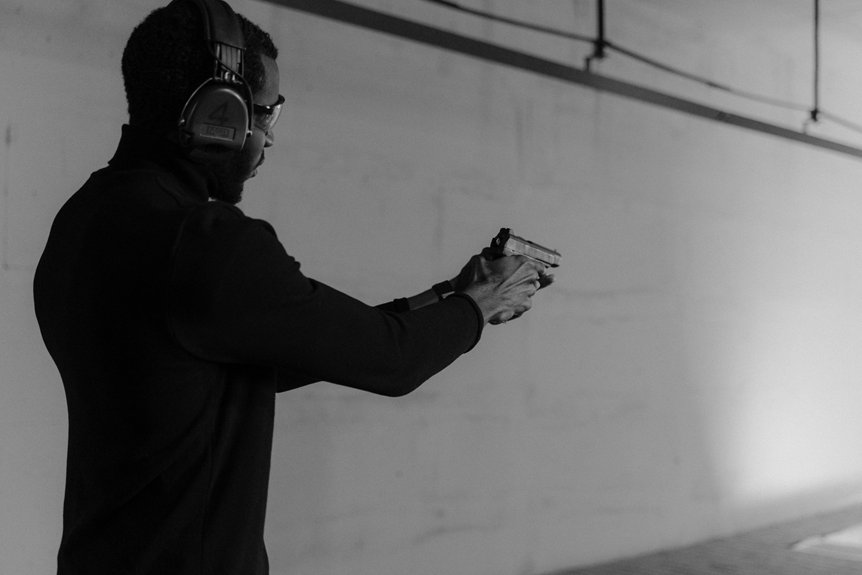
When firing a pistol, how you pull the trigger can make all the difference in your accuracy. You’ll want to focus on a smooth, controlled technique that minimizes any disruptions to your aim. The right grip and finger placement are crucial, but there’s more to it than just that. Understanding the mechanics behind a proper trigger pull can greatly enhance your shooting performance. Let’s explore the key elements that contribute to effective trigger control.
Understanding Trigger Control
When you grasp the fundamentals of trigger control, you set yourself up for more accurate shooting.
Trigger control’s all about how you apply pressure on the trigger without disturbing your aim. Start by ensuring your finger rests on the trigger’s center, allowing for smooth, even pressure. As you squeeze, keep your sights aligned with your target; any jerking or sudden movements can throw off your shot.
Practice the “slow, steady squeeze” technique. This means applying consistent pressure until the shot breaks, rather than pulling the trigger abruptly. Remember, it’s not just about pulling; it’s about feeling the trigger’s resistance and responding accordingly.
Mastering this skill takes time, but it’s essential for improving your overall shooting accuracy.
The Importance of Grip
A solid grip on your pistol is crucial for achieving accuracy and control during shooting. It helps stabilize the firearm, reducing recoil and allowing for quicker follow-up shots.
When you grip the pistol properly, you’re not only ensuring that you maintain control, but you’re also setting yourself up for better trigger control. A firm grip aligns your body with the pistol, enhancing your shooting stance and improving overall performance.
Remember, your hands are your primary point of contact, so ensure that you know how to position them effectively. The right grip minimizes the chances of jerking the trigger, leading to more precise shots.
Finger Placement and Position
Although it might seem minor, the placement of your fingers on the trigger can greatly influence your shooting accuracy.
To start, rest the pad of your index finger on the trigger, ensuring it’s not too far inside or outside. You want to apply pressure straight back, which helps maintain control. Avoid using the first joint of your finger, as this can lead to jerking the trigger, disrupting your aim.
Keep your other fingers wrapped snugly around the grip, providing additional stability. Remember, the placement should feel comfortable and natural, allowing you to focus on your target.
The Mechanics of a Smooth Pull
To achieve a smooth pull of the trigger, it’s essential to understand how the mechanics interplay with your grip and aim. Start by ensuring your finger rests on the trigger’s center, applying steady pressure.
As you begin to pull, maintain a firm grip with your shooting hand while your support hand stabilizes the pistol. This balance helps minimize movement.
Focus on squeezing the trigger straight back, avoiding any jerking motion that can throw off your aim. Your wrist should stay locked, providing a solid platform for the pull.
The Role of Breathing
Breathing plays a crucial role in your shooting accuracy. When you’re about to pull the trigger, it’s essential to control your breath to maintain steadiness.
Take a deep breath, and as you exhale, let it out slowly. This helps you relax and focus your mind. Aim to pull the trigger at the natural pause after your exhale.
If you hold your breath, you might tense up, leading to shaky hands and a less precise shot. Practicing this rhythm helps develop muscle memory, making it easier to find that sweet spot for trigger pull.
Dry Firing Practice Techniques
Practicing your trigger pull through dry firing can significantly enhance your shooting skills. Start by ensuring your pistol is unloaded and in a safe environment.
Focus on your grip and stance, maintaining a solid foundation. Visualize your target and take a deep breath to center yourself. When you’re ready, slowly squeeze the trigger with the pad of your finger, aiming for smoothness and control.
Pay attention to your sights; they shouldn’t move as you pull the trigger. If they do, adjust your technique. Incorporate various drills, like practicing double taps or resetting your trigger pull between shots.
Regular dry firing will build muscle memory and boost your confidence, making you a more proficient shooter when it’s time to live fire.
Common Mistakes to Avoid
Many shooters fall into common traps that can hinder their progress and accuracy. One frequent mistake is jerking the trigger instead of applying steady pressure; this can throw off your aim.
Another issue is gripping the pistol too tightly, which can lead to flinching. Ensure your grip is firm but relaxed.
Additionally, neglecting to align your sights properly can significantly affect your shot placement; always check your sight picture before pulling the trigger.
Rushing your shots can also lead to errors, so take your time and focus.
Lastly, failing to practice regularly can prevent muscle memory from developing, which is crucial for consistent performance.
Avoid these pitfalls to improve your shooting skills and confidence.
Enhancing Your Shooting Consistency
While honing your shooting skills, consistency becomes crucial for improving accuracy and confidence. Focus on your grip, stance, and sight alignment. Ensure your grip is firm but not overly tight, allowing for smooth trigger pulls.
Keep your body balanced and relaxed; tension can lead to unwanted movement. Practice your trigger pull by applying steady pressure without jerking. Use your dominant hand for the trigger while maintaining control with your support hand.
Repetition is key—set aside time for dry firing to enhance muscle memory. Additionally, track your progress by maintaining a shooting journal. This helps identify patterns in your performance and areas for improvement.
Conclusion
In conclusion, mastering trigger control is crucial for accurate pistol shooting. Remember to maintain a firm grip and position your finger correctly on the trigger. Focus on a smooth, straight pull while keeping your breath steady. Practice dry firing to reinforce these techniques and identify any mistakes you might be making. By honing these skills, you’ll enhance your shooting consistency and confidence, ultimately improving your overall performance at the range. Keep practicing, and you’ll see the results!
Tactical Equipment Armory

Tactical Gear Armory is a group of tactical gear geeks! We specialize in everything from martial arts to AR-15's and other firearms.