

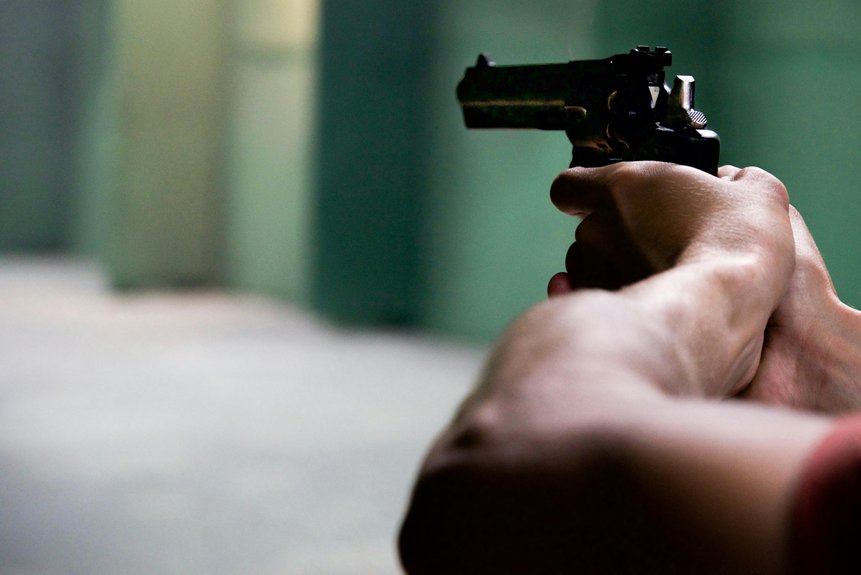
When it comes to holding a pistol, the right grip can make all the difference. You want to avoid looking like a rookie, and it starts with your hand placement and stance. A firm grip and proper body positioning are crucial for control and accuracy. But there are common pitfalls that many beginners stumble into. Understanding these can elevate your shooting skills significantly, so let’s break it down step by step.
Understanding the Importance of Grip
A solid grip is crucial for accurate shooting and overall firearm control. When you pick up a pistol, your grip directly affects your aim and recoil management. If your hands aren’t positioned correctly, you might struggle to stay on target, resulting in erratic shots.
A firm grip helps stabilize the firearm and allows for quicker follow-up shots. You should wrap your dominant hand firmly around the grip, ensuring your fingers are positioned comfortably on the trigger. Your support hand should also play a role, providing additional pressure and stability.
Adjusting your grip as you practice will enhance your confidence and performance. Remember, mastering your grip is one of the first steps towards becoming a proficient shooter.
Choosing the Right Grip Style
While selecting the right grip style for your pistol, consider how it affects both comfort and performance. Your grip should feel natural, allowing for quick and effective control.
There are mainly two styles to choose from: the high grip and the low grip. A high grip positions your hand higher on the frame, reducing recoil and improving accuracy. Conversely, a low grip offers more stability, especially for larger hands.
Experiment with both to see which feels better for you. Additionally, consider the texture of the grip; a rubberized or textured surface can enhance your hold.
Ultimately, your grip style should enhance your confidence and shooting precision, making your experience enjoyable and effective.
Proper Hand Placement and Finger Position
Achieving proper hand placement and finger position is crucial for effective pistol handling. Start by gripping the pistol firmly with your dominant hand, ensuring your fingers wrap around the grip. Your thumb should rest along the side, pointing forward, while the index finger remains straight along the frame until you’re ready to shoot. This keeps it away from the trigger, promoting safety.
Use your non-dominant hand to support the grip by placing it on the opposite side, fingers wrapped around the front. Your non-dominant thumb should rest above your dominant thumb, creating a sturdy grip.
Avoid tension in your hands; a relaxed grip helps maintain control. Proper hand placement enhances accuracy and reduces recoil, making your shooting experience smoother and more effective.
Body Stance and Foot Positioning
Proper body stance and foot positioning are essential for maintaining balance and control when shooting a pistol. Start by standing with your feet shoulder-width apart; this gives you a solid base.
Angle your non-dominant foot slightly forward, while your dominant foot should be positioned back. Bend your knees slightly to ensure stability and keep your weight evenly distributed. Lean slightly forward from your waist, which helps you manage recoil effectively.
Keep your shoulders relaxed but engaged. Your arms should be extended, but don’t lock your elbows. This stance allows for better control and steadiness while aiming.
Practicing Consistency and Control
To develop your shooting skills, practicing consistency and control is crucial. Start by establishing a stable grip on your pistol; your hands should work together seamlessly.
Focus on your trigger finger placement—apply steady pressure without jerking or pulling. You should practice dry firing to reinforce your control, allowing you to concentrate on your sight alignment and trigger squeeze without the distraction of recoil.
Incorporate regular live-fire practice sessions, where you can gauge your performance and adjust your technique. Keep track of your shot placements and identify patterns.
Consistency comes from repetition, so stick to a routine that hones your grip, stance, and aiming. By prioritizing these elements, you’ll build the confidence needed to shoot accurately every time.
Common Mistakes to Avoid
While honing your shooting skills, it’s easy to fall into common pitfalls that can hinder your progress. One major mistake is gripping the pistol too tightly; this can lead to flinching and poor accuracy. Instead, focus on a firm yet relaxed grip.
Another error is neglecting your stance—keep your feet shoulder-width apart and lean slightly forward for stability. Don’t forget to align your sights properly; misalignment can cause you to miss your target entirely.
Additionally, avoid jerking the trigger; practice a smooth, controlled pull to enhance precision. Lastly, don’t overlook proper finger placement—keep your trigger finger outside the guard until you’re ready to shoot.
Conclusion
Mastering how to hold a pistol takes practice, but with the right grip, stance, and consistency, you’ll look and feel like a pro in no time. Focus on maintaining a firm yet relaxed grip, keep your hands aligned, and ensure your body positioning supports your aim. Avoid common mistakes by being mindful of your technique. With dedication, you’ll build muscle memory and gain confidence, transforming you from a rookie into a skilled shooter. Keep practicing!
Tactical Equipment Armory

Tactical Gear Armory is a group of tactical gear geeks! We specialize in everything from martial arts to AR-15's and other firearms.