Choosing Among High-End Gun Safes: A Complete Buyer’s Guide for 2025/2026
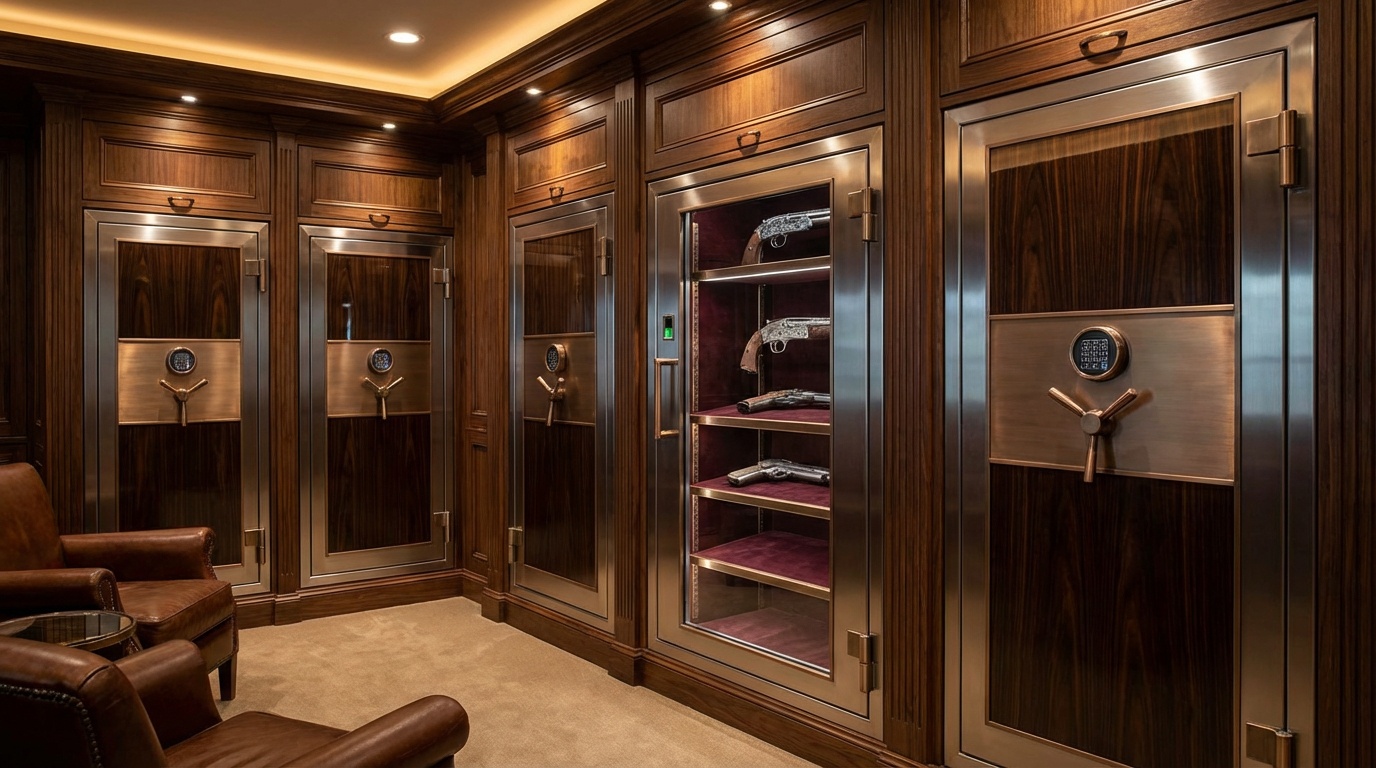
When you’ve invested thousands of dollars in firearms, optics, and accessories, protecting that investment with a budget gun cabinet just doesn’t make sense. High-end gun safes offer the security, fire protection, and peace of mind that serious firearms owners need. But with prices ranging from $1,500 to well over $5,000, choosing the right safe requires careful consideration of your specific needs, budget, and long-term storage requirements.
This comprehensive guide walks you through everything you need to know about selecting a premium gun safe, with a focus on models actually available through Amazon—meaning you can get true high-end security without dealing with specialty dealers or complicated delivery logistics.
Why High-End Gun Safes Are Worth the Investment
Before diving into specific models, let’s address the elephant in the room: why spend $2,000+ on a gun safe when you can find “gun cabinets” on Amazon for under $300?
The answer comes down to three critical factors: construction quality, fire protection, and actual security.
The Truth About Budget Gun Cabinets
Those $200-$500 gun cabinets flooding Amazon’s marketplace are made from thin 12-16 gauge steel that can be penetrated with common hand tools in minutes. They typically lack genuine fire protection, use simple electronic locks that can be bypassed, and offer minimal pry resistance. Marketing claims about “8 live locking bolts” sound impressive until you realize the entire door frame can be pried open because the steel is so thin.
These cabinets serve a purpose—keeping honest people honest and children away from firearms—but they won’t stop a determined thief with a crowbar and five minutes of privacy.
What You Get With Premium Safes
High-end gun safes built by manufacturers like Steelwater, Browning, Liberty, and Fort Knox use 11-12 gauge steel with reinforced door frames, multiple layers of fire protection rated for 60-120 minutes at temperatures exceeding 1400°F, gear-driven locking mechanisms that resist prying and drilling, internal relockers that engage if the lock is attacked, and construction that weighs 400-1200+ pounds, making them nearly impossible to remove from your property.
The difference isn’t just incremental—it’s categorical. You’re not buying a slightly better cabinet; you’re buying genuine security.
The Amazon Advantage: Why Buy Premium Safes Online
Traditionally, high-end gun safes were only available through specialty dealers, requiring in-person shopping and complicated delivery arrangements. Amazon has changed this landscape significantly.
When you buy a premium safe through Amazon, you get competitive pricing that often beats local dealers by 20-30%, genuine customer reviews from verified purchasers, freight delivery included in the price (critical for 500-1000+ pound safes), Amazon’s customer service and return policies as backup, and the ability to compare multiple models side-by-side without sales pressure.
Most importantly, you’re buying from established manufacturers who’ve simply added Amazon as a sales channel—you’re not sacrificing quality for convenience.
One important note: safes weighing over 115 pounds ship via freight carrier, not standard parcel delivery. The driver will deliver to your garage or ground floor, but you’ll need help moving it to its final location. For safes over 500 pounds, consider hiring professional safe movers for the final placement.
Top High-End Gun Safes Available on Amazon
Let’s examine the best premium options currently available, organized by price tier and intended use.
Premium Tier: $1,800-$2,500
Steelwater AMLD593924-EMP (39 Long Gun Capacity)
The Steelwater Heavy Duty series represents the sweet spot of value and quality in the high-end safe market. At around $2,000, the 39-gun model delivers features you’d expect from safes costing twice as much.
Construction and Security: Built from 12-gauge steel with reinforced door frames and corners, the AMLD593924 uses 18 solid steel locking bolts—11 active chrome-plated bolts plus 7 inactive bolts on the hinge side, providing four-sided bolt coverage. This design means even if thieves remove the hinges (a common attack method), the door still won’t open.
The gear-driven lock and bolt system adds strength against prying, punching, and drilling attacks. An 8X drill-resistant hard plate protects the combination dial, relocker, gear drive, and linkages from drill attacks. Most budget safes have no drill protection, or small plates that leave the mechanism vulnerable.
An internal spring-loaded relocker automatically engages if the lock is punched out or removed during a burglary attempt, keeping the safe secured even if the primary locking mechanism is defeated.
Fire Protection: Rated for 60 minutes of fire protection with exterior temperatures reaching 1875°F, the Steelwater uses double-layer fireproofing material on the top, sides, back, door, and door frame. The heat-activated expandable door seal expands up to 8 times its thickness when exposed to fire, sealing out smoke and water from firefighting efforts.
This isn’t theoretical protection—at 1875°F, you’re looking at temperatures that would destroy ammunition, melt plastic components, and damage wood stocks in an unprotected safe. Sixty minutes gives firefighters time to control most residential fires before your collection is destroyed.
Interior Organization: The fully upholstered grey interior features a three-section gun rack capable of storing up to 13 long guns per section (39 total), though this assumes rifles without large scopes. Realistically, expect to store 25-30 rifles with optics comfortably. Seven adjustable/removable shelves provide flexibility for organizing ammunition, accessories, and valuables.
One full-length shelf (36″ x 14¾”) is reinforced with two steel U-channel plates to prevent sagging—a common problem in lesser safes where shelves bow under the weight of ammunition cans. Six smaller shelves (11¼” x 14⅝”) can be positioned in the left and right sections.
The included door organizer features built-in handgun pouches and storage pockets for documents, extra magazines, or accessories. This isn’t a cheap hanging organizer you’d add later—it’s integrated into the door construction.
Modern Conveniences: The EMP-proof electronic keypad includes a high-security double-bitted bypass key for access if the electronics fail (whether from an EMP, dead batteries, or electronic malfunction). This dual-access approach provides redundancy without compromising security.
Automatic LED interior lighting activates when you open the door and shuts off when closed—powered by a high-grade UL-listed power supply with three AC outlets and two USB charging ports mounted inside. This lets you keep electronic hearing protection charged, run a dehumidifier, or power other accessories.
The included Dry Pack 450-gram silica gel rechargeable dehumidifier helps prevent rust in humid climates. Just dry it in your oven every few months to recharge the crystals.
Four pre-drilled ½” diameter anchor holes, reinforced with ¼” steel plate, let you bolt the safe to concrete floors for additional security.
The Verdict: For around $2,000, the Steelwater AMLD593924 delivers exceptional value. It’s a true safe with genuine fire protection, not a glorified cabinet. The construction quality rivals safes costing $4,000-$6,000 from big-name brands, and customer reviews consistently praise the build quality and customer service.
The main drawback is weight—at over 800 pounds, you’ll need professional help positioning it, and it’s not moving without serious effort (which is exactly the point from a security standpoint).
Steelwater AMLD724228-BLK (45 Long Gun Capacity)
If you need more capacity or want absolute maximum security in the Steelwater lineup, the 45-gun model steps up to 20 solid steel locking bolts and includes all the features of the 39-gun model.
The larger interior dimensions (72″ x 42″ x 28″) accommodate full-length rifles including those over 50 inches, and the additional bolts provide even more pry resistance. At around $2,500, it’s still remarkably affordable for this level of protection.
The weight exceeds 1,000 pounds, making professional installation essentially mandatory, but also making theft nearly impossible.
Kodiak KB5529ECS by Rhino Metals
Positioned in the $1,200-$1,800 range, the Kodiak represents excellent value from an established manufacturer. While not quite as heavily built as the Steelwater premium models, it offers solid protection at a more accessible price point.
Key Features:
- Stores up to 30 long guns and 10 handguns
- Thick steel composite walls with reinforced construction
- 30-minute fire rating at 1400°F
- Electronic lock with predrilled mounting holes for dehumidifier and concrete anchoring
- Door organizer and adjustable shelving with plush interior walls
- Weighs approximately 390 pounds
The Kodiak uses the SafeX security system, which provides reliable protection against common attacks. While the fire rating is lower than Steelwater’s 60-minute protection, 30 minutes at 1400°F still offers meaningful protection for most residential fire scenarios.
The organizational features are thoughtful, with adjustable shelving that lets you customize the interior for your specific collection. The plush interior walls protect firearm finishes from scratches.
One consideration: Rhino Metals charges a restocking fee if you return the safe, so be certain of your size requirements before ordering.
Ultra-Premium Tier: $2,500-$5,000+
Steelwater AMHD Series (Extreme Duty with 2-Hour Fire Protection)
For those who want maximum protection, Steelwater’s Extreme Duty line offers 2-hour fire ratings and enhanced security features.
The AMHD724228-EMP (45 Long Gun, Extreme Duty) provides 120 minutes of fire protection—double the standard Heavy Duty models. This extended rating uses additional layers of fire-resistant material, increasing the safe’s weight but providing protection for even the most intense fires.
The construction is identical to the Heavy Duty series in terms of steel gauge and locking mechanisms, but the extra fire protection makes this the choice for anyone storing irreplaceable firearms, historical pieces, or extensive collections where even partial loss would be devastating.
Prices range from $2,800-$3,500 depending on size, putting these in the serious investment category.
Browning HC65 (65 Long Gun Capacity)
If you need truly massive capacity and have the budget to match, the Browning HC65 represents the pinnacle of commercially available gun safes. At around $3,000-$4,000, it’s a significant investment that delivers exceptional protection and capacity.
Construction:
- 11-gauge steel body with 1¼” formed door including inner plate
- Pry-stop end bolts for enhanced security
- 90-minute fire rating at 1680°F
- Capacity for up to 65 long guns (realistically 40-50 with scopes and accessories)
Organization: The DPX door rack and Axis Adjustable Shelving system provide best-in-class organization. The shelving adjusts without tools, letting you reconfigure as your collection changes. The manageable 60-inch height makes it easier to fit into spaces with standard ceiling heights, unlike some ultra-tall safes that require special placement considerations.
Customization: Browning offers options for locking mechanisms (electronic, mechanical, or biometric), exterior colors, and hardware finishes. This customization lets you match your safe to your home’s aesthetic if it’s going in a living area rather than a hidden location.
Considerations: At over 1,000 pounds, professional installation is mandatory. You’ll also need to carefully plan the route to the final location—measure doorways, consider stair width if going to a basement, and verify that your floor can support the weight. Second-story installations require structural assessment.
The price point is substantial, but for serious collectors with 40+ firearms, the per-gun cost of protection actually becomes quite reasonable compared to buying multiple smaller safes.
SnapSafe Super Titan XXL Double Door
The SnapSafe solves one of the biggest problems with premium safes: how do you get a 1,000-pound safe into your home, especially if it needs to go upstairs or through narrow doorways?
The Modular Advantage: SnapSafe, now owned by Hornady, pioneered modular gun safe design. The Super Titan XXL ships flat on a pallet, and you assemble it piece by piece in its final location. Each component weighs less than 170 pounds, meaning two people can handle installation without professional movers.
This matters enormously if you live in a home with limited access, plan to move in the future, or want the safe on an upper floor. Traditional safes that weigh 800-1,200 pounds require professional moving companies charging $300-$600+ for installation, and they still might not fit through your doorway or up your stairs.
Security and Protection: Despite the modular design, the Super Titan XXL doesn’t compromise on security. Once assembled:
- All-welded steel construction forms a solid, integrated unit
- Robust locking bolts and deadbolt system
- EMP-resistant electronic lock
- MgO (magnesium oxide) panels and ceramic insulation provide 1-hour fire resistance
- Spacious interior with adjustable shelves and gun racks
Organization: The double-door design provides excellent accessibility—you can easily reach firearms on both sides without awkward angles. The customizable interior lets you configure shelving and gun racks to match your specific collection.
Price Point: At around $2,000-$2,500, the Super Titan XXL sits in the premium tier while offering unique installation advantages. If you’ve been hesitant about buying a high-end safe due to installation concerns, this is your solution.
The tradeoff is that modular construction, while impressively solid once assembled, may not quite match the brute-force strength of a traditional welded safe. For most homeowners, this distinction is academic—the Super Titan XXL will defeat any burglar who doesn’t bring professional safe-cracking tools or hours of time.
Vaultek RS Series (Smart Safe Technology)
Vaultek brings modern technology to gun safe design, creating safes that integrate with your smartphone and home network. The RS Series represents the cutting edge of smart safe technology.
Technology Features:
- Biometric fingerprint scanner with quick access
- Internet connectivity sends real-time alerts to your phone
- App control lets you monitor safe status, grant/revoke access, and review access logs
- Multiple users with individual codes and fingerprints
- Anti-theft alerts if the safe is moved or tampered with
Traditional Security: Beyond the tech features, the RS Series delivers solid physical security with heavy-duty steel construction, drill-resistant locks, impact detection, and professional-grade security comparable to traditional premium safes.
Fire Protection: Fire ratings vary by model, but RS safes generally provide 60 minutes of protection at standard fire temperatures.
Price Considerations: Vaultek’s premium technology commands premium prices—expect to pay $1,500-$3,000 depending on size and features. You’re paying for convenience and technology alongside traditional security.
Who Should Consider Vaultek: If you value smart home integration, want detailed access logs (especially useful in homes with multiple users), travel frequently and want remote monitoring, or simply enjoy cutting-edge technology, Vaultek delivers. If you’re a traditionalist who prefers purely mechanical security without apps or connectivity, stick with Steelwater or Browning.
Key Features to Evaluate in High-End Safes
Understanding the specifications and marketing claims requires knowing what actually matters for security and usability.
Fire Ratings: What the Numbers Really Mean
Fire ratings specify two variables: time and temperature. A 60-minute rating at 1875°F means the safe’s interior will remain below the critical temperature threshold for paper (350°F) for 60 minutes while the exterior is exposed to 1875°F.
Residential Fire Context: Most residential fires reach peak temperatures of 1400-1800°F. Firefighters typically arrive within 8-12 minutes in urban areas, with active suppression beginning shortly after. A safe with 60-minute protection will survive most residential fires if the fire department responds reasonably quickly.
What’s Inside Matters: Remember that fire ratings protect paper documents. Ammunition, gunpowder, and some optics are more heat-sensitive. If you’re storing collectible firearms with ivory or bone components, or expensive optics, consider safes with 90-120 minute ratings for extra margin.
Fire Protection Costs Weight: Fire-resistant materials add significant weight. Compare two similar-sized safes and the one with better fire protection will be substantially heavier. This weight is necessary for protection—don’t be tempted by “lightweight fireproof safes” that claim similar ratings.
Steel Gauge: Thicker Is Better
Steel gauge works inversely—smaller numbers mean thicker steel. Budget cabinets use 16-gauge steel (approximately 0.06 inches thick), while premium safes use 11-12 gauge steel (0.10-0.12 inches thick). This doesn’t sound like much, but it nearly doubles the thickness.
Why It Matters: Thicker steel resists prying, drilling, and cutting attacks. It also provides better fire protection by slowing heat transfer. The door should be thicker than the body—look for safes with formed doors that include inner plates for additional strength.
Locking Bolts: More Isn’t Always Better
Marketing departments love touting “20 locking bolts!” but raw numbers don’t tell the whole story. What matters is bolt diameter, bolt length, whether bolts are solid or hollow steel, four-sided coverage (including the hinge side), and the locking mechanism’s resistance to manipulation, drilling, and prying.
A safe with 12 solid steel bolts, four-sided coverage, and a gear-driven mechanism beats a safe with 20 thin hollow bolts that only extend on three sides.
Hinge-Side Protection: Quality safes include “deadbolts” or “inactive bolts” on the hinge side. Even if thieves remove the hinges, these bolts keep the door secured. This is standard in premium safes but often missing in budget models.
Electronic vs. Mechanical Locks
High-end safes offer both options, each with advantages.
Electronic Locks:
- Faster access (6-8 digit code vs. spinning a dial)
- Multiple user codes possible
- Some models include audit trails
- Battery-powered (usually 9V, lasting 3-5 years)
- EMP-proof versions include mechanical backup
Mechanical Locks:
- No batteries to die
- Impossible to hack electronically
- Decades of proven reliability
- Require more skill to operate correctly
The Verdict: For most users, electronic locks with mechanical backup (like Steelwater’s EMP-proof system with bypass key) provide the best of both worlds. You get daily convenience with emergency backup.
Avoid safes with electronic locks that have no mechanical backup—if the electronics fail while you’re on vacation or during an emergency, you’re locked out until you can get a locksmith.
Interior Organization
Premium safes should offer adjustable gun racks that accommodate rifles with large scopes, removable shelves for ammunition and accessories, door panel organizers for handguns and magazines, reinforced shelving that won’t sag under ammunition weight, and barrel rests that protect firearm finishes.
Realistic Capacity: Manufacturers rate capacity based on rifles without scopes stored barrel-to-stock alternating. A “40-gun safe” realistically holds 25-30 modern sporting rifles with optics. Plan for 60-70% of the rated capacity for practical use.
If you have large-objective scopes (50mm+), bolt-action rifles with oversize bolts, or tactical rifles with accessories, capacity drops further.
Interior Lighting and Power
Quality safes include automatic LED lighting that activates when you open the door. This seems like a luxury until you’re accessing your safe in low light and can’t identify firearms by feel.
Interior power outlets let you run dehumidifiers, charge electronics, or power additional lighting. Look for actual AC outlets, not just USB ports—you want flexibility for various devices.
Installation and Placement Considerations
Even after you’ve selected the perfect safe, installation requires careful planning.
Floor Load Capacity
A fully loaded 1,000-pound safe concentrates immense weight in a small footprint. First-floor concrete slabs handle this easily, but second-story installations require structural assessment. Most residential floors are built for 40 pounds per square foot of live load. A 1,000-pound safe measures roughly 60″ x 30″, or 12.5 square feet, creating 80 pounds per square foot of concentrated load.
This exceeds standard residential floor capacity. Consult a structural engineer before placing heavy safes on upper floors—you may need additional support beams installed.
Basement installations on concrete slabs are ideal from a structural standpoint and offer additional security (harder for thieves to access, remove, or attack undisturbed).
Anchoring
Every premium safe includes pre-drilled anchor holes in the base. Use them. Anchoring to concrete serves multiple purposes: prevents the safe from being tipped over (creating leverage for attacks), stops thieves from removing the safe entirely, and satisfies insurance requirements for coverage.
Quality concrete anchors are inexpensive compared to your safe’s value. Use grade-5 or better bolts, and ensure they penetrate at least 3 inches into solid concrete. If anchoring to wood floor joists, use lag bolts that penetrate multiple joists and expect less security than concrete anchoring.
Delivery Logistics
Freight delivery includes delivery to your garage or ground floor entrance, but not interior placement. Measure your route carefully:
- Doorway widths (standard interior doors are 30-32 inches)
- Hallway widths for turns
- Stairway width and landing space if going to basement or upper floor
- Ceiling heights for tall safes
- Final room dimensions
Professional safe movers charge $200-$600 depending on complexity. They have specialized equipment (stair-climbing dollies, pneumatic lifts) and insurance for damage. This is money well spent—amateur safe moving causes thousands of dollars in property damage annually (crushed doorframes, damaged hardwood floors, destroyed drywall).
Environmental Considerations
Even in climate-controlled homes, firearms need humidity management inside safes. Metal safes create enclosed environments where humidity can concentrate, causing rust and corrosion.
Dehumidification Options:
- Electric rod dehumidifiers (plug into interior outlet, use gentle heat to reduce humidity)
- Rechargeable silica gel containers (absorb moisture, recharge in oven)
- Electric dehumidifiers with drainage (best for humid climates)
Monitor interior humidity with a small hygrometer—ideal range is 30-50% relative humidity. Higher levels risk rust; lower levels can crack wood stocks.
Budget Considerations: Where to Invest
With prices ranging from $1,500 to $5,000+, budget allocation requires strategic thinking.
The 70/30 Rule
Financial advisors suggest spending no more than 70% of your firearms’ value on security. If you own $3,000 worth of guns, a $2,000 safe makes sense. If you own $20,000 worth of guns, budget $3,000-$4,000 for protection.
This rule balances security with financial sensibility—at some point, you’re better spending additional money on insurance rather than incrementally better safe features.
Security First, Convenience Second
If budget requires choosing between two otherwise similar safes, prioritize physical security and fire protection over convenience features. A safe with superior fire rating but basic interior organization beats one with fancy racks but weaker protection.
You can always add aftermarket organizers, LED strips, or hygrometers. You can’t upgrade fire protection or steel thickness.
Long-Term Planning
Buy more capacity than you currently need. Firearm collections tend to grow over time, and you don’t want to need a second safe in three years because you filled the first one.
A good rule: if you own 15 firearms now and think you might buy more, purchase a 30-gun safe rather than a 20-gun safe. The incremental cost is minor compared to buying a second safe later.
Financing Options
Many retailers offer financing on safes over $1,000. If you’re earning interest on your savings, 0% financing for 12-24 months can make sense financially. Just ensure you can pay the balance before promotional rates expire.
Amazon itself offers financing through various credit products, and manufacturers like Steelwater sometimes run promotional financing directly.
Insurance Considerations
Homeowner’s insurance typically covers firearms, but with limitations you should understand before a loss occurs.
Standard Coverage Limits
Most homeowner’s policies limit firearms coverage to $2,500 total, regardless of actual value. If you own more than basic hunting rifles, you likely exceed this limit.
Additionally, standard policies may not cover theft from unlocked storage, business use (if you’re an FFL dealer), or collectible value beyond replacement cost for basic functionality.
Scheduled Personal Property Riders
For collections exceeding $2,500, add a scheduled personal property rider that specifically covers firearms. This requires appraisals and documentation but provides full replacement value coverage.
Safe Ownership Benefits
Insurance companies often discount premiums for firearms stored in quality safes. Discounts of 5-15% are common, potentially offsetting safe costs over time. Some insurers require safes meeting specific standards (UL-rated, specific fire ratings) for coverage above certain limits.
Document your safe purchase and installation (photos, receipts, serial numbers) for insurance purposes. If you ever file a claim, proof of proper storage strengthens your position.
Maintenance and Long-Term Care
Premium safes require minimal maintenance but benefit from regular attention.
Annual Checklist
Once yearly, perform these basic maintenance tasks:
Lock Maintenance:
- Test electronic locks with fresh batteries
- Test mechanical backup keys
- Lubricate lock mechanisms per manufacturer instructions (usually dry graphite powder, not oil)
Interior Care:
- Vacuum or wipe interior to remove dust
- Check dehumidifier function (test silica gel color indicators, verify electric units operate)
- Inspect and adjust shelf organization as collection changes
Exterior:
- Wipe exterior with damp cloth (avoid harsh chemicals on powder coating)
- Check anchor bolts remain tight
- Verify door seals remain intact and undamaged
Documentation:
- Update firearm inventory
- Photograph new acquisitions for insurance records
- Review and update emergency access information (combination changes, who knows codes)
Lock Combination Management
Change your combination every 2-3 years, or immediately if you suspect compromise. Store the combination in a separate secure location (bank safe deposit box, password manager) where family members can access it in emergencies.
Never write combinations on tape stuck to the safe or in obvious nearby locations. Home invaders know to check desk drawers and safes’ undersides.
Top Recommendations by Use Case
Different users have different priorities. Here are specific recommendations for common scenarios:
Best Overall Value: Steelwater AMLD593924-EMP
For most serious firearms owners, the Steelwater 39-gun Heavy Duty safe hits the sweet spot of price, protection, and features. At around $2,000, it delivers high-end security and fire protection without forcing you into the ultra-premium price tier. The EMP-proof electronic lock with mechanical backup, 60-minute fire rating at 1875°F, 18 locking bolts with four-sided coverage, and included organizational accessories make this the safe I’d recommend to friends and family.
Best for Large Collections: Browning HC65
If you own 30+ firearms and need genuine massive capacity, the Browning HC65’s 65-gun rating (realistically 40-50 with optics) combined with adjustable shelving and premium construction justifies the $3,000-$4,000 investment. The 90-minute fire rating and 11-gauge steel construction provide peace of mind for valuable collections.
Best for Difficult Installations: SnapSafe Super Titan XXL
Homes with narrow doorways, upper-floor installations, or future moving plans benefit enormously from modular design. The SnapSafe solves installation problems traditional safes can’t overcome while maintaining solid security and fire protection. At $2,000-$2,500, you’re getting convenience without significant price premium.
Best for Tech Enthusiasts: Vaultek RS Series
If you want smartphone integration, remote monitoring, and detailed access logs, Vaultek delivers cutting-edge technology alongside solid physical security. The premium price buys convenience and peace of mind for frequent travelers or households with multiple users requiring granular access control.
Best Budget Premium Option: Kodiak KB5529ECS
For buyers stretching to afford premium security, the Kodiak at $1,200-$1,800 provides solid protection from a reputable manufacturer without breaking into the $2,000+ tier. While not as heavily built as Steelwater’s premium models, it far exceeds budget cabinets and offers meaningful fire protection.
Common Mistakes to Avoid
Buying Based on Capacity Alone
Don’t fixate exclusively on gun capacity. A safe that holds 45 guns but has weak fire protection or thin steel provides false security. Balance capacity with protection level.
Ignoring Installation Costs
Budget for professional installation when calculating total cost. A $2,000 safe that requires $500 in moving costs actually costs $2,500. Failure to account for this leads to either dangerous amateur moving attempts or budget overruns.
Overlooking Dehumidification
Even in dry climates, enclosed safes concentrate humidity. Budget $30-$100 for dehumidification equipment from day one. Rust damage from months of humid storage can cost more than your safe.
Trusting Capacity Ratings
Manufacturers rate capacity optimistically. Assume you’ll achieve 60-75% of rated capacity with realistic firearms (rifles with scopes, tactical guns with accessories). Buy accordingly.
Neglecting Documentation
Photograph your firearms, record serial numbers, and document values before putting them in the safe. Store this documentation separately (cloud backup, bank box) so you have records if your safe and contents are destroyed or stolen.
Cheap Anchoring
After spending $2,000+ on a premium safe, don’t sabotage security with $10 anchors. Use quality concrete anchors rated for the load, or hire professionals for proper installation.
Final Thoughts: Security You Can Trust
Choosing a high-end gun safe represents a significant investment, but it’s an investment in protecting what you’ve already accumulated. Whether that’s $5,000 or $50,000 in firearms, proper security provides peace of mind that budget cabinets simply can’t deliver.
The good news is that today’s market offers genuine high-end security through accessible channels like Amazon, with competitive pricing, freight delivery, and customer service backing up your purchase. You no longer need to navigate specialty dealers, negotiate pricing, or arrange complicated logistics.
For most serious firearms owners, the Steelwater Heavy Duty series represents the best balance of price, protection, and features. The AMLD593924-EMP at around $2,000 delivers security and fire protection that rivals safes costing twice as much, backed by excellent customer reviews and solid manufacturer support.
If your needs differ—whether that’s massive capacity (Browning HC65), difficult installation (SnapSafe modular), or smart technology (Vaultek RS Series)—excellent options exist at various price points.
Whatever you choose, prioritize these non-negotiable features: minimum 60-minute fire rating at 1400°F+, 11-12 gauge steel construction, four-sided bolt coverage with gear-driven mechanisms, electronic locks with mechanical backup, and capacity 40-50% beyond your current collection size.
Your firearms represent significant financial investment, but more importantly, they may represent family heirlooms, tools for providing food, or means of protecting your family. They deserve protection that actually works when tested by fire, theft, or disaster.
Don’t settle for security theater disguised as gun cabinets. Invest in genuine protection, install it properly, maintain it consistently, and sleep better knowing your investment is truly secure.
Have questions about specific safe models or installation scenarios? Drop them in the comments below. And if you found this guide helpful, share it with fellow firearms owners who deserve to know the truth about high-end gun safe security.
Tactical Equipment Armory

Tactical Gear Armory is a group of tactical gear geeks! We specialize in everything from martial arts to AR-15's and other firearms.