

When you find yourself in a high-pressure situation, shooting accurately can feel like an uphill battle. Your body reacts instinctively, and stress can cloud your judgment. But there are techniques you can use to maintain control and improve your accuracy. By focusing on your breathing and grip, you can create a stable foundation. Understanding how to manage these elements is crucial, especially when the stakes are high. So, what strategies can you employ to ensure precision under pressure?
Understanding the Impact of Stress on Performance
When you’re under stress, your body reacts in ways that can affect your shooting performance. Your heart rate increases, and adrenaline floods your system, making you more alert but also more jittery.
This heightened state can lead to shaky hands and difficulty focusing. You might notice your breathing becomes shallow or erratic, further impairing your aim.
Stress can also distort your perception of time, making it feel like things are moving faster than they are. This can lead to rushed decisions and poor shot placement.
Recognizing these physiological responses is crucial. By understanding how stress impacts your body, you can develop strategies to manage it, ultimately improving your accuracy and confidence when it matters most.
Breathing Techniques to Enhance Focus
To enhance your focus while shooting, mastering your breathing is essential. Start by taking a deep breath, filling your lungs completely. This helps calm your mind and reduces anxiety.
As you prepare to take a shot, exhale slowly, allowing your body to relax. When you reach the end of your breath, pause briefly. This moment of stillness gives you a chance to align your sights and concentrate on your target.
Avoid holding your breath too long, as it can create tension. Instead, find a rhythm that works for you—breathe in, breathe out, and shoot during the natural pause in your breath.
Practicing these techniques will sharpen your focus and improve your accuracy under stress.
The Importance of Grip and Stance Under Pressure
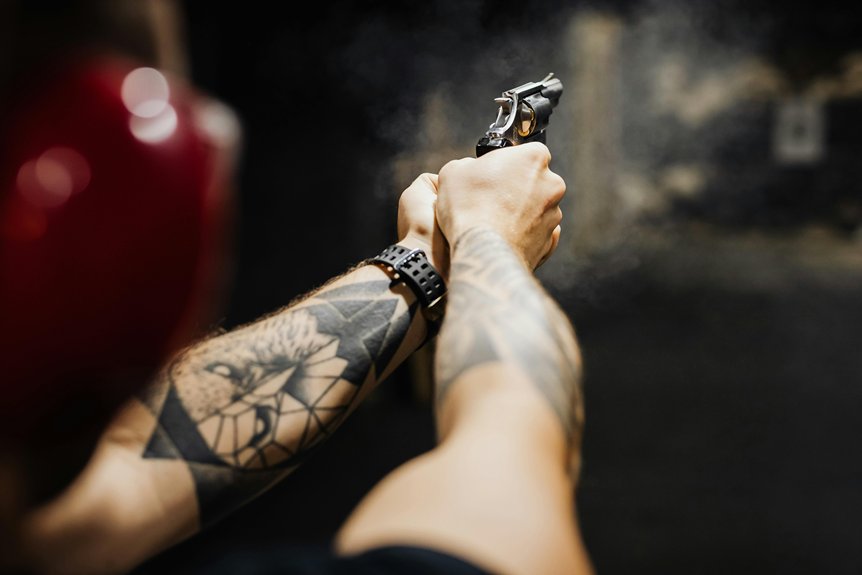
While mastering your grip and stance might seem secondary, they play a crucial role in your accuracy under pressure. A firm grip stabilizes your gun, allowing for better control and reduced recoil. Make sure your dominant hand wraps around the grip securely, while your support hand reinforces it, creating a unified hold.
Your stance matters too; it provides balance and stability. Stand with your feet shoulder-width apart, leaning slightly forward to absorb any movement. Keep your body relaxed yet ready, which helps you adapt to sudden changes.
When you’re under stress, these fundamentals can mean the difference between hitting your target or missing entirely. Prioritize your grip and stance; they’re your foundation for accurate shooting in high-pressure situations.
Mental Strategies for Maintaining Composure
Your physical readiness is only part of the equation; mental composure is equally vital for accurate shooting. To maintain your calm under stress, focus on your breathing. Inhale deeply, hold for a moment, then exhale slowly. This simple technique can help ground you and reduce anxiety.
Visualize your target and the successful execution of your shot before you draw. This mental rehearsal builds confidence and sets a positive mindset. Embrace the challenge as an opportunity to showcase your skills rather than a source of fear.
When distractions arise, acknowledge them without letting them consume you; refocus on your technique. Remember, staying composed allows you to react effectively, ensuring that your accuracy remains sharp even in high-pressure situations.
Practicing Realistic Scenarios for Improved Accuracy
Practicing realistic scenarios can significantly enhance your shooting accuracy by mimicking the conditions you might face in actual situations. Set up drills that involve movement, decision-making, and diverse target engagements.
Use simulations that incorporate stressors like time constraints or unexpected distractions to replicate high-pressure environments.
Try shooting from different positions—standing, kneeling, or behind cover—to develop adaptability. Incorporate low-light conditions or varied weather to challenge your skills further.
Additionally, practice with a partner who can create unexpected elements, such as verbal commands or sudden movements. This unpredictability helps you stay focused and improves your response time.
Consistently integrating these elements into your training will build your confidence and accuracy, preparing you for real-life scenarios when it counts most.
Conclusion
By mastering the techniques outlined, you can significantly improve your ability to shoot a pistol accurately under stress. Focus on your breathing, maintain a strong grip and stable stance, and use mental strategies to stay composed. Don’t forget to practice in realistic scenarios to simulate pressure and distractions. The more you prepare, the more confident and accurate you’ll become when it counts. Remember, consistency in these practices will lead to success on the range and beyond.
Tactical Equipment Armory

Tactical Gear Armory is a group of tactical gear geeks! We specialize in everything from martial arts to AR-15's and other firearms.