How To Tell a Glock Generation By Serial Number: Complete Identification Guide

TLDR: To identify your Glock’s generation, check the format of the serial number, which can have a two-letter, three-letter, or four-letter prefix. Look for physical features like finger grooves and accessory rails, as well as markings on the slide. Generations 1 and 2 use two-letter prefixes, Generation 3 and early Generation 4 use three-letter prefixes, and late Generation 4 and Generation 5 use four-letter prefixes. You can also look for visual clues such as the presence of an accessory rail (Generation 3 and above), finger grooves (Generation 3 and 4), and “GEN4” or “GEN5” markings on the slide for quick confirmation of your Glock’s generation.
Understanding which generation your Glock pistol belongs to isn’t just collector trivia. It affects parts compatibility, holster selection, and resale value. The serial number offers crucial clues about your firearm’s manufacturing timeline and specifications. This guide will show you exactly how to identify your Glock generation using serial numbers and physical characteristics.
What Do Glock Serial Numbers Tell You About Generation?


Glock serial numbers follow a specific format that evolved with each generation. The prefix structure changed as Glock expanded production and introduced new models. Early Glock pistols featured two-letter prefixes followed by three digits. Later models adopted three-letter and eventually four-letter prefix systems.
The serial number appears on the left side of the slide and on a serial number plate embedded in the frame. U.S. market pistols include a “US” suffix after the numbers. For example, a Gen 2 Glock 17 might carry the marking “AF234US” while a newer Gen 5 could display “BCKR567US”.
Serial numbers starting with certain prefix ranges indicate specific production periods. Gen 1 Glock 17 models used prefixes from AA through HF. Gen 2 models expanded the range significantly as production ramped up. Understanding these patterns helps pinpoint manufacturing dates and confirm authenticity.
How Can You Identify Gen 1 or Gen 2 Glock Models?
The 1st gen Glock pistols are rare collector items today. Only the Glock 17 was produced during this initial phase from 1982 to 1988. These pistols feature smooth “pebblestone” texture covering the entire grip with no checkering. The frame has a distinctive half-moon cutout at the base of the frontstrap.
Gen 2 Glock models introduced checkering to the front and backstrap. The grip texture changed to deeper side panels. This generation saw massive expansion with models 17 through 33 entering production. Additional calibers appeared including .40 S&W, 10mm, and .45 ACP.
Both generations lack an accessory rail on the dust cover. The serial numbers use two-letter prefixes exclusively. Austrian proof marks appear on these early models but their placement varies. If you own a 2 Glock model, you’re holding a piece of firearms history that predates many modern features shooters take for granted.
What Physical Features Distinguish Gen 3 Glock Pistols?
The gen 3 Glock introduced three signature features that remain controversial among shooters. Finger grooves were molded into the frontstrap to improve grip control. An accessory rail was added to the dust cover for mounting lights and lasers. Thumb rest indents appeared at the top of the grip panels on both sides.
Gen 3 production began in 1998 and continues today for certain markets like California. These pistols initially used three-letter serial number prefixes. The extractor was redesigned to protrude when a round is chambered, serving as a loaded chamber indicator. This generation represents the longest production run in Glock history.
The gen 3 glock remains incredibly popular due to extensive aftermarket support. Triggers, slides, barrels, and sights are widely available. Many shooters prefer Gen 3 for custom builds. The frame dimensions work with holsters designed for Gen 4 as well. Police departments worldwide still issue these reliable handguns.
How To Tell Gen 3 From Gen 4 Glock Using Serial Numbers and Features?
The gen 4 Glock debuted in 2010 with several ergonomic improvements. The most obvious difference is the interchangeable backstrap system. Three different backstraps allow customization for various hand sizes. The slide clearly displays “GEN4” marking above the model designation.
Serial numbers on gen4 glock pistols initially used three-letter prefixes before transitioning to four-letter codes. The texture pattern changed to an aggressive pyramid design inspired by the RTF2 experimental models. This provides better purchase when hands are wet or wearing gloves. The magazine release became larger and reversible for left-handed shooters.

A dual recoil spring assembly replaced the single spring used in previous generations. This reduces felt recoil and extends component lifespan. The gen 3 and gen 4 share finger grooves and accessory rail features. However, the modular backstrap immediately identifies Gen 4. Look for a visible seam where the backstrap attaches to the frame.
What Makes Gen 5 Glocks Different From Earlier Generations?
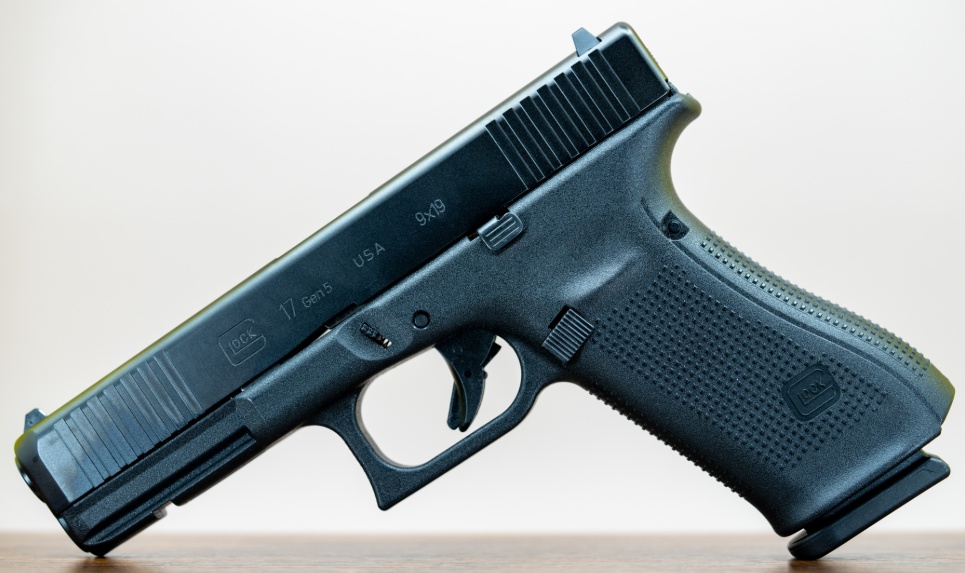
The gen 5 glock represents Glock’s most refined design. Finger grooves were completely removed based on feedback from shooters with smaller hands. The flared magwell speeds up reloads during high-stress situations. Forward slide serrations allow press checks and loading manipulation from the front.
Gen 5 models feature fully ambidextrous controls including the slide stop lever. The magazine release is reversible like Gen 4. A nDLC finish provides superior corrosion resistance compared to earlier coatings. The Glock Marksman Barrel improves accuracy through enhanced rifling.
Serial numbers on gen 5 glocks use four-letter prefixes exclusively. The slide displays “GEN5” marking though some variants like the 19X and 43X technically align with Gen 5 but lack this designation. These pistols represent current production standards. Parts are not always backward compatible with earlier generations due to internal revisions.
Where Can You Find Serial Numbers on Your Glock?
Every Glock features serial numbers in two locations for identification purposes. The primary marking appears on the left side of the slide near the ejection port. This location allows quick verification without disassembling the pistol. The engraving is deep and permanent.
Check out some of our more popular tactical and survival products
- Fatal Blackout Book/Survival Guide
- Stinger Combact Optic
- VNSH Holster
- Tactistaff Hiking Stick
- Trekstaff Trek Pole
- Raven Night Vision
- Predator Laser Sight
- BYRNA TCR
A second serial number plate is embedded in the frame on the left side below the slide. This metal plate cannot be removed without destroying the frame. The dual marking system prevents unauthorized modifications and helps trace stolen firearms. Both locations display identical serial numbers.
Austrian proof marks also appear on glocks manufactured in Austria. These stamps indicate quality control testing and compliance with European standards. Early Gen 1 models sometimes lack consistent proof mark placement. U.S.-made glock pistols produced at the Smyrna, Georgia facility may have different marking patterns. The test fire date sometimes appears near the serial numbers on newer models.
Can Serial Number Ranges Help Determine Manufacturing Dates?
Glock typically produces pistols in runs of one thousand units. A serial number sequence progresses from 000 to 999 for each prefix. For example, prefix “BCD” would run from BCD000US through BCD999US. This system allows collectors to estimate production quantities and timelines.
Different glock generations used specific prefix patterns. Gen 1 used two letters. Gen 2 expanded to additional two-letter combinations as production increased. Gen 3 introduced three-letter prefixes. Late Gen 4 and all Gen 5 models use four-letter prefixes. The transition periods saw overlap as factories worked through inventory.
Serial number ranges provide approximate manufacturing dates but exact dating requires factory records. The Glock Collectors Association maintains historical data on first-run serial numbers. Glock customer service can sometimes provide information about production dates for warranty purposes. Police departments often maintain purchase records showing when specific serial numbers were acquired.
What’s The Best Method For Glock Serial Number Lookup?
Several resources help owners identify their glock’s generation and manufacture date. The Glock Collectors Association offers a serial number lookup service for members. Their database includes first-run serial numbers for rare models. This service proves invaluable for authentication and valuation purposes.
Online forums like GlockTalk contain extensive threads where collectors share serial number information. Users post their serial numbers along with generation confirmation and purchase dates. This crowdsourced data helps establish production timelines. However, information accuracy varies and should be cross-referenced.
Glock lookup by serial number through official channels provides the most reliable results. Contact Glock customer service directly with your serial number. They can confirm generation, model designation, and sometimes provide production date ranges. Law enforcement agencies use serial number databases to verify ownership and check for stolen firearm reports.
How Do Glock 30 Generations Differ From Each Other?
The Glock 30 is a subcompact .45 ACP pistol with distinct generational variants. Gen 3 Glock 30 models feature the standard finger grooves, accessory rail, and thumb rests. The grip is necessarily thick to accommodate the powerful 10mm width .45 ACP cartridge. This handgun serves as a backup weapon for many officers.
Glock 30 Gen 4 added the modular backstrap system which particularly benefits this model. The .45 ACP recoil can be substantial in a compact package. Adjustable backstraps help shooters find optimal grip positioning. The dual recoil spring system reduces muzzle flip compared to Gen 3. The Gen4 marking appears clearly on the slide.
A Gen 4 variant called the Glock 30S features a slimmer slide borrowed from the Glock 36. This reduces weight and improves concealability while maintaining the standard Glock 30 frame. Serial numbers follow the same prefix patterns as other Gen 4 models. The 30S proves popular among concealed carriers who want .45 ACP power in a manageable package.
What Physical Inspection Points Confirm Your Glock’s Generation?
Start by examining the dust cover area below the barrel and slide. Gen 1 and Gen 2 models have smooth dust covers with no rail. Gen 3, Gen 4, and Gen 5 all feature an accessory rail molded into this area. The rail allows attachment of tactical lights and laser sights.
Check the frontstrap for finger grooves. Gen 3 and Gen 4 have pronounced grooves molded into the grip. Gen 5 removed these grooves entirely for universal hand fit. Gen 1 and Gen 2 never had finger grooves. This single feature quickly narrows down the generation.
Inspect the top of the slide for generation markings. Gen 4 displays “GEN4” while Gen 5 shows “GEN5” in the slide’s left side marking. Earlier generations lack these specific callouts. Examine the backstrap area. Gen 4 and Gen 5 have removable backstraps with visible seams. Gen 3 and earlier feature solid, non-removable grip housings. The magazine release size and reversibility also indicates generation. Gen 4 and Gen 5 use larger, ambidextrous controls.
Understanding The History Of Glock Development
The history of glock began in 1982 when Gaston Glock designed the polymer frame pistol in Austria. The Austrian military adopted it quickly. This revolutionary design used a striker-fired mechanism rather than traditional hammer systems. The polymer frame reduced weight while maintaining durability.
Glock entered the U.S. market in the mid-1980s. Law enforcement agencies appreciated the high capacity 9mm magazines and reliability. The simple design required minimal training. Departments could transition officers quickly from revolvers to semi-automatic pistols. Word spread rapidly about the new platform.
Each generation built upon proven designs while addressing user feedback. Glock first introduced new models and calibers cautiously. Success in one market segment led to expansion into others. The company maintained backward compatibility where possible to preserve customer investment in accessories and training. This deliberate evolution created the diverse glock model lineup available today.
Key Takeaways For Identifying Your Glock Generation
- Serial number prefix format indicates generation: two letters (Gen 1-2), three letters (Gen 3 – early Gen 4), four letters (late Gen 4 – Gen 5)
- Accessory rail on dust cover confirms Gen 3 or later model production
- Finger grooves on frontstrap indicate Gen 3 or Gen 4, absence suggests Gen 1, Gen 2, or Gen 5
- Slide markings displaying “GEN4” or “GEN5” provide definitive generation confirmation
- Modular backstrap system with visible seam identifies Gen 4 or Gen 5 pistol
- Reversible magazine release and larger mag release button appeared starting with Gen 4
- Forward slide serrations and flared magwell are exclusive to Gen 5 models
- Austrian proof marks, while present on most models, vary in placement and don’t indicate specific generation
- Glock customer service and collector associations offer serial number lookup services for verification
- Physical inspection combining multiple features provides most reliable generation identification
- Parts compatibility between generations varies significantly, making proper identification crucial for upgrades and maintenance
- The correct generation determination affects holster fitment, especially between Gen 4 and Gen 5 models
- Understanding generation characteristics helps assess fair market value and collector interest
Tactical Equipment Armory

Tactical Gear Armory is a group of tactical gear geeks! We specialize in everything from martial arts to AR-15's and other firearms.